Nutrition
Healthy eating isn't just about choosing a variety of nutritious foods, it's also about understanding how much you should eat. While the terms portion size and serving size are often used interchangeably, they have distinct meanings when it comes to meal planning and nutrition. Understanding the difference can help you make more informed food choices and better support your overall health and wellness goals.
What is the difference between portion size and serving size?
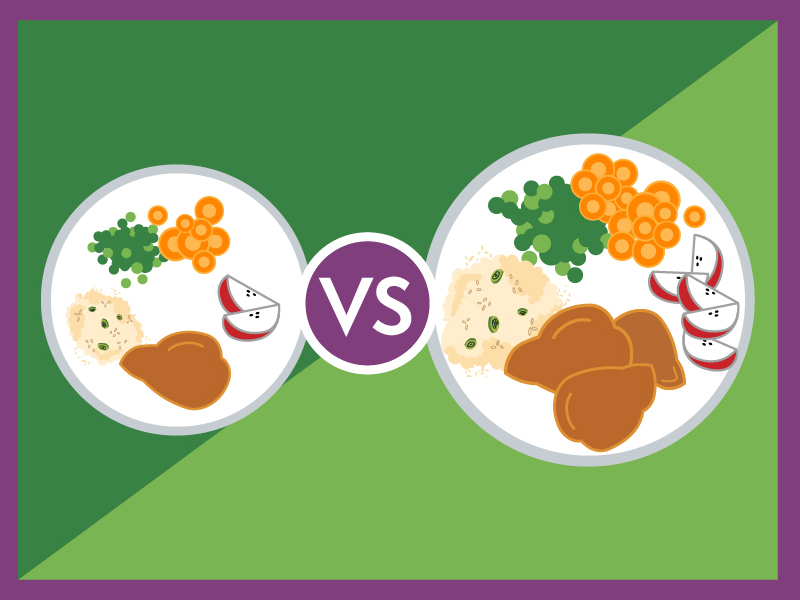
Portion size is the amount of food or drink you choose to eat or serve yourself at one time, whether at home or in a restaurant for example. Because portion size is based on personal eating habits, it may be larger or smaller than the recommended serving size.
Serving size, on the other hand, is a standardized amount of food used in nutrition guidelines and on Nutrition Facts labels. It serves as a reference point for understanding calorie and nutrient content and for comparing foods.
To see the number of servings per container, look at the top of the Nutrition Fact label. Foods are measured in a variety of ways, including cups, ounces, slices or individual pieces. As a result, the amount you put on your plate may equal one serving, multiple servings or only a fraction of a serving. For example, one standard serving of ice cream is 2/3 cup. If you give yourself a scoop that is 1 1/3 cup, your portion size will be twice the standard serving size.
Should you follow serving sizes?
Whether or not you strictly follow serving sizes can depend on several personal factors. Your age, activity level and overall energy needs all play a role in how much food your body requires each day. Someone who is very active may need larger portions than someone with a more sedentary lifestyle.
Health goals and medical conditions are also important to consider. For example, individuals managing conditions such as diabetes, heart disease or high blood pressure may benefit from paying closer attention to serving sizes to help manage nutrients like carbohydrates, sodium and fats. Check with your healthcare provider before you make changes to your diet. Your provider can help you build an eating plan that’s right for your specific health needs.
Following recommended serving sizes can help:
- Reduce the likelihood of overeating
- Support healthy weight management
- Improve nutrient intake
- Encourage more balanced eating habits
- Simplify meal planning and grocery shopping
- Support more mindful eating
While serving sizes are not strict rules, they can be a useful guide for making informed food choices and maintaining a healthier lifestyle.
Mom's Meals® can help
We provide the most comprehensive food as medicine solutions nationwide, including medically tailored meals for nutrition-sensitive conditions and overall wellness. Each home-delivered meal is thoughtfully designed by registered dietitians and professional chefs using high-quality ingredients and balanced portions of lean proteins, grains, vegetables and fruits.
Mom’s Meals are free from artificial food dyes, artificial sweeteners, and primarily use natural flavors. In addition, we no longer produce meals with the artificial preservatives of potassium sorbate and sodium benzoate. All our meals have the FDA nutrition facts panel on them so you can easily see nutrition information, including serving size.
Enjoy tasty, ready-to-heat-and-eat meals that take the guesswork out of eating better!