Health Condition Support

Over 1 in 20 individuals experience swallowing difficulties during their lifetime. This condition is known as dysphagia and commonly involves complications and pain or discomfort when swallowing, affecting a person’s ability to eat or drink.
Dysphagia can be an acute or a chronic condition, and while dysphagia can occur at any age, it is more common in older adults. This condition is experienced by 48% of older adults, and up to 51% of nursing home residents.
People with dysphagia report having difficulty swallowing food or drinks, chewing, sucking, controlling saliva, taking medication or protecting their airway from choking. If left untreated, ongoing problems can affect a person’s ability to meet their nutrition and hydration needs and can lead to mealtime anxieties due to choking risks or swallowing discomfort.
Common causes of dysphagia
Dysphagia is often caused by underlying health or physical issues. For example, it can happen when chewing becomes harder, teeth or dentures are missing or the mouth and throat become less sensitive, making it more difficult to move food safely from the mouth to the stomach.
Dysphagia can often be caused by:
- Alzheimer’s disease
- Cerebral palsy
- Meningitis and brain tumors
- Mouth, throat or esophageal cancer
- Multiple sclerosis
- Parkinson's disease
- Traumatic brain injury
- Spinal cord injury
- Stroke
Typically, a full assessment including a bedside swallowing evaluation, or a barium swallow study will be used to make a diagnosis.
Complications from dysphagia
A common warning sign of dysphagia is chronic coughing or choking while eating and gagging when swallowing. If a person does not receive treatment to help with their symptoms and continues to have challenges swallowing, especially when eating and drinking, they can be at risk for developing other health issues, including:
- Dehydration
- Malnutrition
- Pneumonia or respiratory infections
- Weight loss
- Anxiety and depression
Since dysphagia accompanies an underlying condition or is due to weakened or damaged muscles and nerves used for swallowing, diagnosing and treating what is causing the condition is essential to improving a person’s quality of life.
Treating dysphagia
Treatment for dysphagia depends on the underlying cause but often includes swallowing exercises, positioning the head to allow for easier swallowing and prescribing medication to treat the condition causing the dysphagia.
Another common approach is modifying the texture of foods (chopped, minced, pureed) and thickening liquids. These changes can make it easier to control food in the mouth and swallow more safely, helping reduce the risk of choking or food enter the airway.
In the past, healthcare providers often used a variety of terms to describe diets for those requiring altered consistency foods, including “mechanical soft,” “blended smooth” and “chopped.” To help provide universal guidelines for the dysphagia diet, the International Dysphagia Diet Standardization Initiative (IDDSI) set out to standardize diets and liquid consistency. In 2019, the American Speech Language-Hearing Association and Academy of Nutrition and Dietetics endorsed the use of this International Dysphagia Diet.
Dysphagia diet guidelines
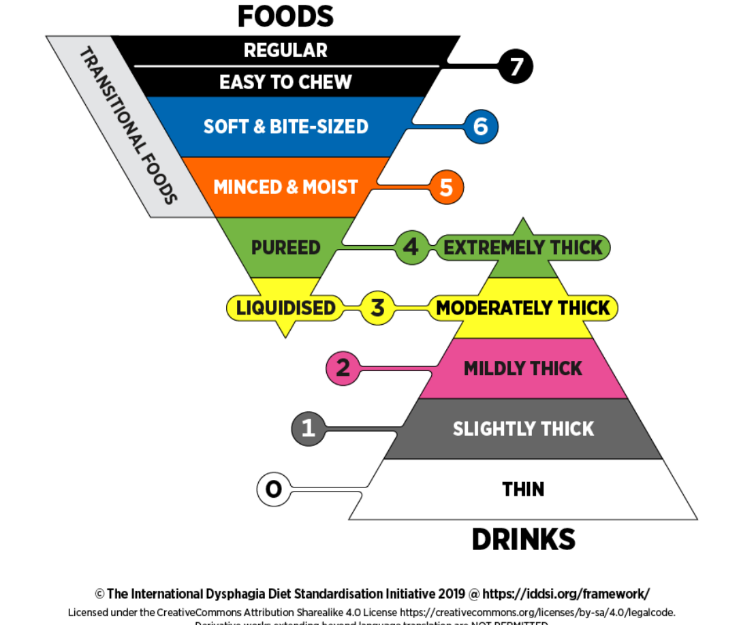
The IDDSI framework provides common terminology for describing food textures and drink thickness to improve safety for individuals with swallowing difficulties.
This framework consists of a continuum of 8 levels (0 - 7). Drinks are categorized by their thickness and are assigned to a level between 0 and 4, while foods range from liquidized (level 3) to regular and easy to chew (level 7). Using this standardized system helps healthcare providers clearly explain the right texture and consistency, making eating and drinking safer and easier to manage.
Mom’s Meals® food as medicine solutions
To help people live healthier lives through delicious and nutritious food, Mom's Meals delivers the nation's most comprehensive food as medicine solutions, including medically tailored meals, and nutrition counseling and education.
For those living with dysphagia, our pureed menu includes fully prepared soft food meals. Our menu options have all been designed to meet the Academy of Nutrition and Dietetics requirement for Dysphagia (Level 1 - Pureed Nutritional Therapy). While Mom’s Meals has not officially adopted the IDDSI guidelines, our pureed menu is intended to meet the guidelines of level 4 – pureed.

Dysphagia brochure to share
Help others learn more about dysphagia and receive helpful tips in our brochure, Managing Your Dysphagia with Nutrition. Getting the proper nutrition can help people dealing with dysphagia live a healthier and more fulfilling life.