Nutrition
Humankind has always focused on food. Where our next meal would come from was fundamental to our existence. But it wasn’t until the 1970s that the greater health care community began to come together around a formal concept of food security.
Food security
Although the definition varies, food security generally describes the concept of reliable, consistent access to food. The opposite term, food insecurity (or lack of food sufficiency), describes a lack of access to that same food.
Shifting focus from food security to nutrition security
Disparities
Access to nourishing foods, not just food, throughout a person’s life is the foundation of good health. But historically, access to good nutrition hasn’t been equal in the U.S. Extensive research shows clear disparities in diet quality due to factors commonly grouped as upstream drivers of health, also known as social determinants of health.
For example:
- More than 23 million people in the U.S. live in “food deserts,” areas with limited access to affordable, nutritious food
- They may also live in “food swamps,” areas that have an abundance of fast food and junk food outlets, but not much high-quality food
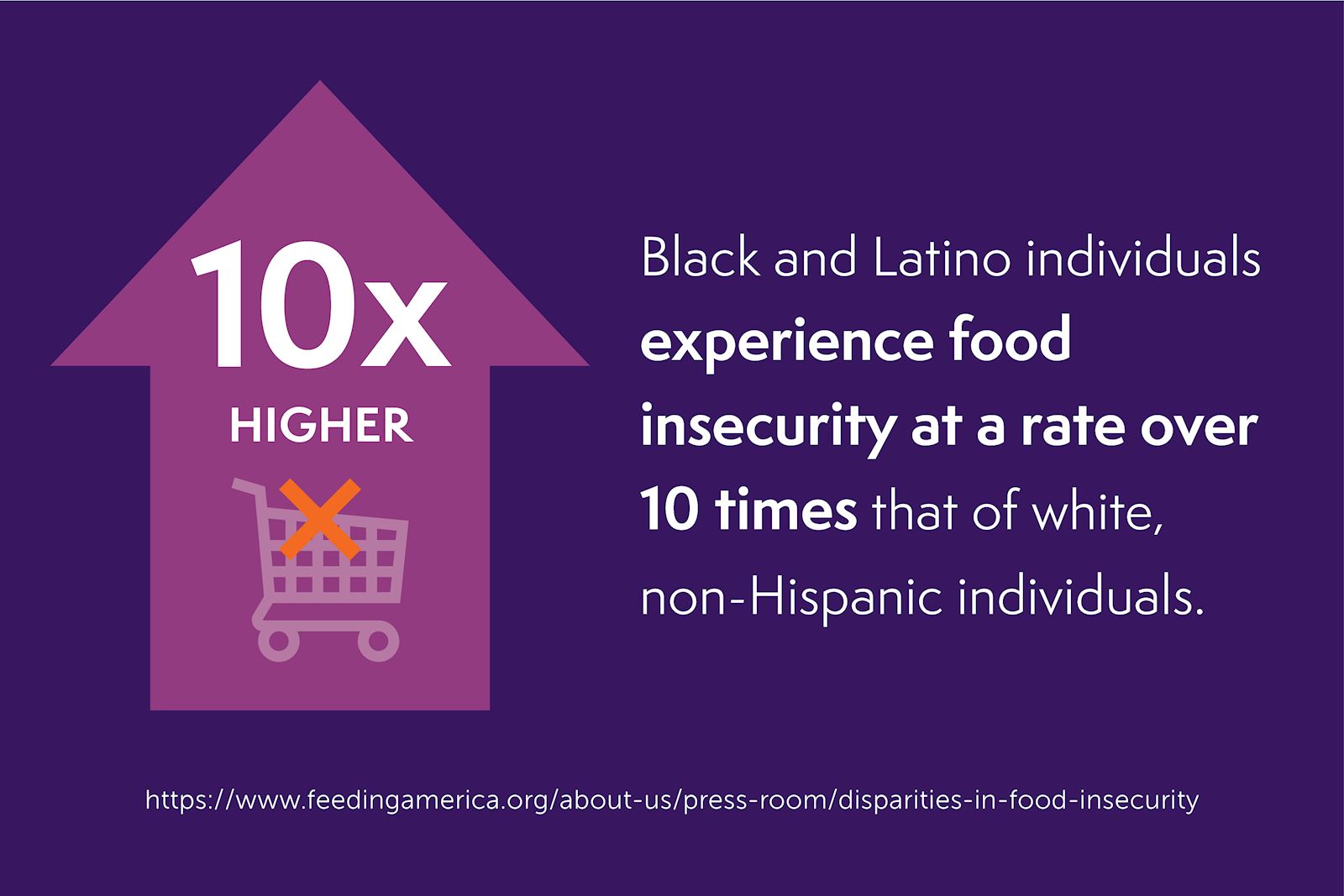
- Black and Latino individuals experience food insecurity at a rate over 10 times that of white, non-Hispanic individuals
- A typical food swamp has four unhealthy eating options for every health eating option
The connection between nutrition and chronic illness
The Centers for Disease Control and Prevention notes chronic diseases as the leading driver of the nations’ healthcare costs and poor nutrition as one of the main risk factors. Quality is the differentiator. While food security is about consistent access to calories, nutrition security focuses on consistent access to foods that promote well-being and prevent and manage disease.
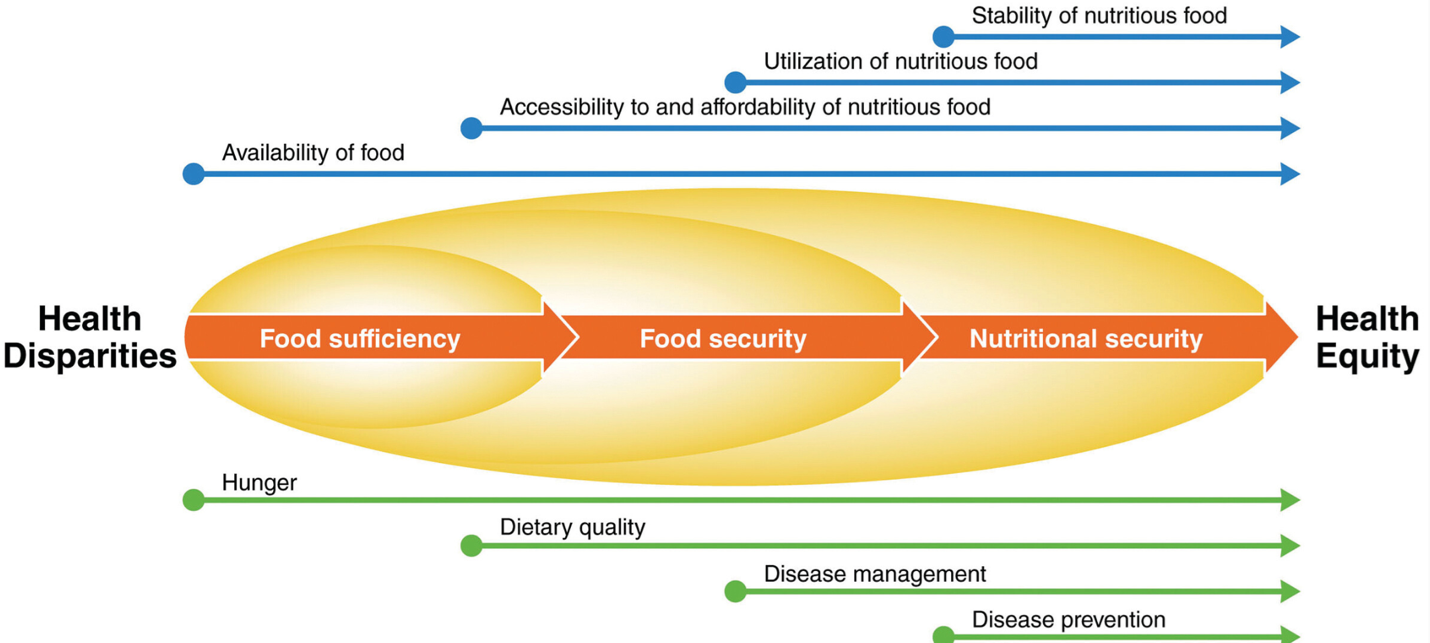
Source: https://www.ahajournals.org/doi/10.1161/CIRCOUTCOMES.123.010319
Taking notes of the shift
As chronic conditions continue to drive high levels of illness, death and healthcare spending in the U.S., several entities are shifting their focus from food security to nutrition security. A Health Affairs article provides an overview of how policy makers, the government, healthcare organizations, clinicians and public and private companies are pulling together to focus on nutrition security. This effort represents a subtle, yet significant, shift in how we perceive nutrition’s role in whole person care using food as medicine.
Whereas food security was coined in response to broadly negative outcomes like malnutrition and hunger, nutrition security refines the focus to specifically preventing and in some cases, treating nutrition-sensitive, chronic conditions. This new distinction draws a line between ensuring access to food in general and ensuring access to the right food.
Example: Is it food security or nutrition security?
Many people have a general idea of what good nutrition looks like: a balanced diet heavy on fresh fruits and vegetables, whole grains and lean meats, and light on sugar, fats and processed foods. But what’s healthy for one person isn’t always the best choice for another.
For example, people living with kidney disease or dialysis have a unique and complex set of dietary needs. Many food items considered healthy in other diets — avocados, whole wheat bread, bananas and tomatoes, to name a few — contain elevated levels of potassium, phosphorus and sodium, which in excess could harm individuals living with a renal condition.
This scenario demonstrates how someone who is food secure on paper, might not be nutrition secure given their ability to access the special diet they need to manage their illness.
This same thinking applies to managing many health conditions with specific nutritional requirements like diabetes, hypertension, heart failure, cancer, maternity, obesity and more. And given the millions of Americans living with those conditions, food security and nutrition security will continue to be vital considerations.
Mom's Meals® can help
Medically tailored home-delivered meals
Committed to making access to quality nutrition easier for everyone, we offer medically tailored meals for most common nutrition-sensitive chronic health conditions, such as diabetes, heart and renal diseases along with pureed, gluten-free and general wellness options:
- 9 delicious menus and more than 60 meal choices
- Ready-to-heat-and-eat convenience
- Designed by registered dietitians and crafted by professional chefs
- Made from high-quality ingredients
- Produced in USDA- and FDA-inspected facilities
- Delivery to any address nationwide no matter how rural or underserved
Food as Medicine at Scale:
Targeted Nutrition Interventions to Improve Outcomes and Reduce Total Cost of Care
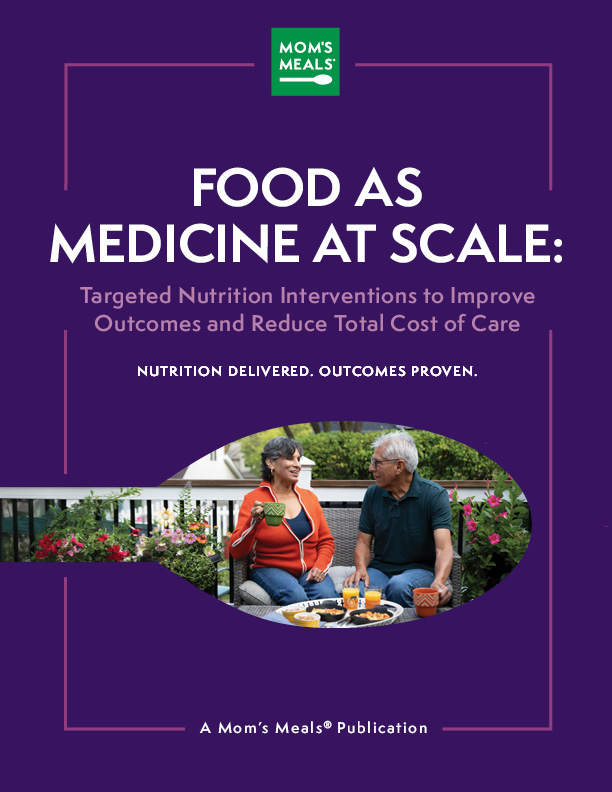
Mom's Meals® white paper provides new evidence and practical insights for healthcare leaders with an in-depth exploration of:
- Where food as medicine has the greatest impact
- Program models that support long-term success
- Strategies to improve outcomes and reduce total cost of care