Insights + Perspectives

More than 50% of Americans will be diagnosed with a mental illness at some point in thier lifetime. It takes a toll on lives and health care spending as untreated mental illness costs the nation as much as 300 billion per year. Supporting the treatment of mental health using food as medicine is proving to be a helpful tool.
Mental health and poor health
Chronic conditions
Mental health disorders are also strongly associated with serious chronic diseases and health conditions like diabetes, hypertension, stroke, heart disease and cancer. One common finding is that people who suffer from chronic diseases are more likely to also suffer from depression. One's risk increases if the illness is more serious and causes greater disruption in the person's life.
In addition, research has found that not only do mental health disorders often precede chronic health issues, but chronic diseases can magnify symptoms of mental health disorders. Unfortunately, people can get trapped in a vicious cycle of poor health.
Unhealthy behaviors
People living with mental illness may develop unhealthy behaviors. Mental illness can affect social and cognitive functions and lower energy levels, causing individuals to lose interest in their own health. As a result, they may adopt poor eating and sleep habits or start smoking and abusing substances — all of which contribute to negative health outcomes.
The role of nutrition in treating mental illness
Nutrition insecurity increases the risk of mental illness
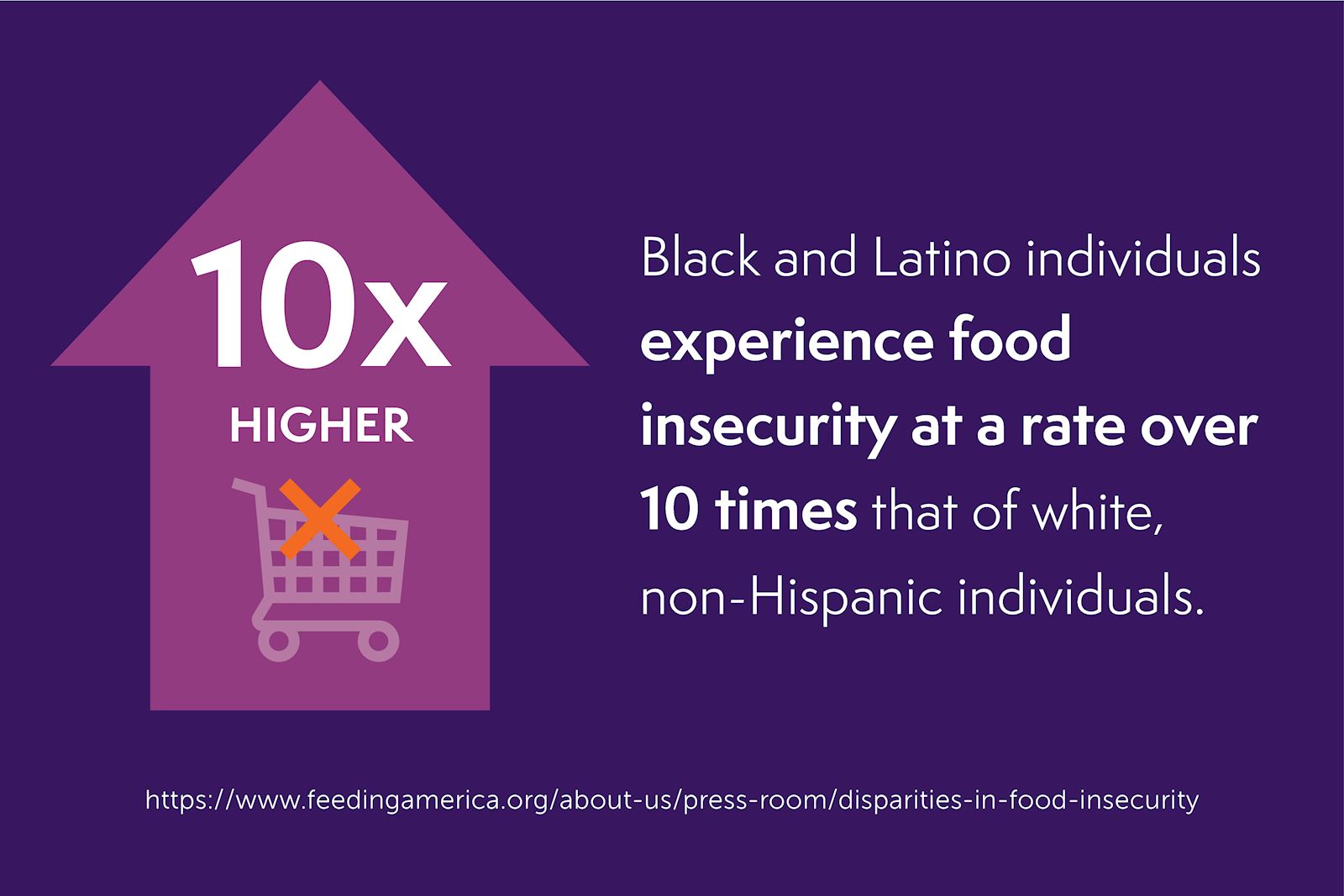
People with serious mental illness are also more likely to face poverty, social isolation, residential instability and food and nutrition insecurity that may delay recovery and reduce quality of life. Access to nutritious food is a vital element of upstream drivers of health. It is linked with negative outcomes, puts people at higher risk for developing chronic diseases and is associated with an elevated risk of mental illness.
A lack of stable access to food presents a host of challenges not only for people with severe mental illness, but also for their family members and caregivers. Challenges may include adhering to prescribed medications and other treatment regimens, and attending medical appointments at specified times.
Nutrition and substance abuse disorder (SUD)
Nutrition is an essential component of care for people with SUD. People who use drugs and alcohol have higher rates of malnutrition, which is the result of changes in appetite and eating habits as well as problems with the absorption and use of nutrients by the body, secondary to substance abuse. This malnutrition and accompanying vitamin and mineral deficiencies, can result in several effects, including depression, weight loss, immune deficiency, irregular heart rate and body temperature, muscular atrophy and weakness, constipation, cognitive impairment and trouble with mood regulation, which can attribute to resistance to recovery.
Providing support using food as medicine solutions
Programs that focus on nutrition can help improve health outcomes and ultimately reduce the economic burden of mental, behavioral and substance abuse disorders. For example, Medicaid health plans and other payers are supporting their members with these disorders and chronic conditions, and are addressing nutrition insecurity through home-delivered meals.
Specific outcomes may include:
- Improved nutrient intake
- Reduced nutrition insecurity
- Improved adherence and absorption
- Improved focus on recovery and treatment programs
- Increased engagement with providers
- Lower health care utilization (inpatient/outpatient/emergency department)
- Decreased total cost of care
Food as medicine at work
Mom’s Meals® collaborated with UnitedHealthcare® Community Plan of Wisconsin (UHC WI) on a 2021-2022 pilot program to support 96 high-risk, high-cost members with a behavioral health diagnosis by meeting their basic need for nutrition. Members received three condition-appropriate, home-delivered meals for 90 days.
Results included:
- 48% decrease in inpatient admissions
- 34% decrease in emergency department utilization
- 61% decrease in inpatient costs
- 44% decrease in total cost of care post-period for program membership
As growing research connects nutrition and mental health, there continues to be initiatives aimed at meeting the nutritional needs of people living with mental illness. Although eating nutritiously may not eliminate or treat mental illness on its own, a healthy diet must be part of a whole-person approach.
Additional Resources
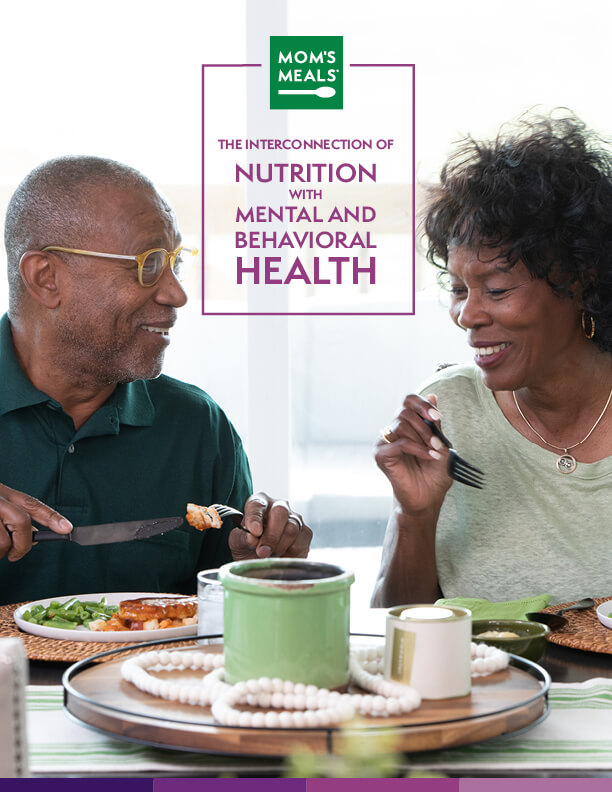
White paper provides insights
Download our free white paper, The Interconnection of Nutrition With Mental and Behavioral Health, to take a closer look at this relationship and studies that prove how using food as medicine can help.
Medically tailored home-delivered meals programs
Mom’s Meals partners with health plans and payers to help support their members with mental and chronic conditions and address nutrition insecurity through home-delivered meals.