Insights + Perspectives
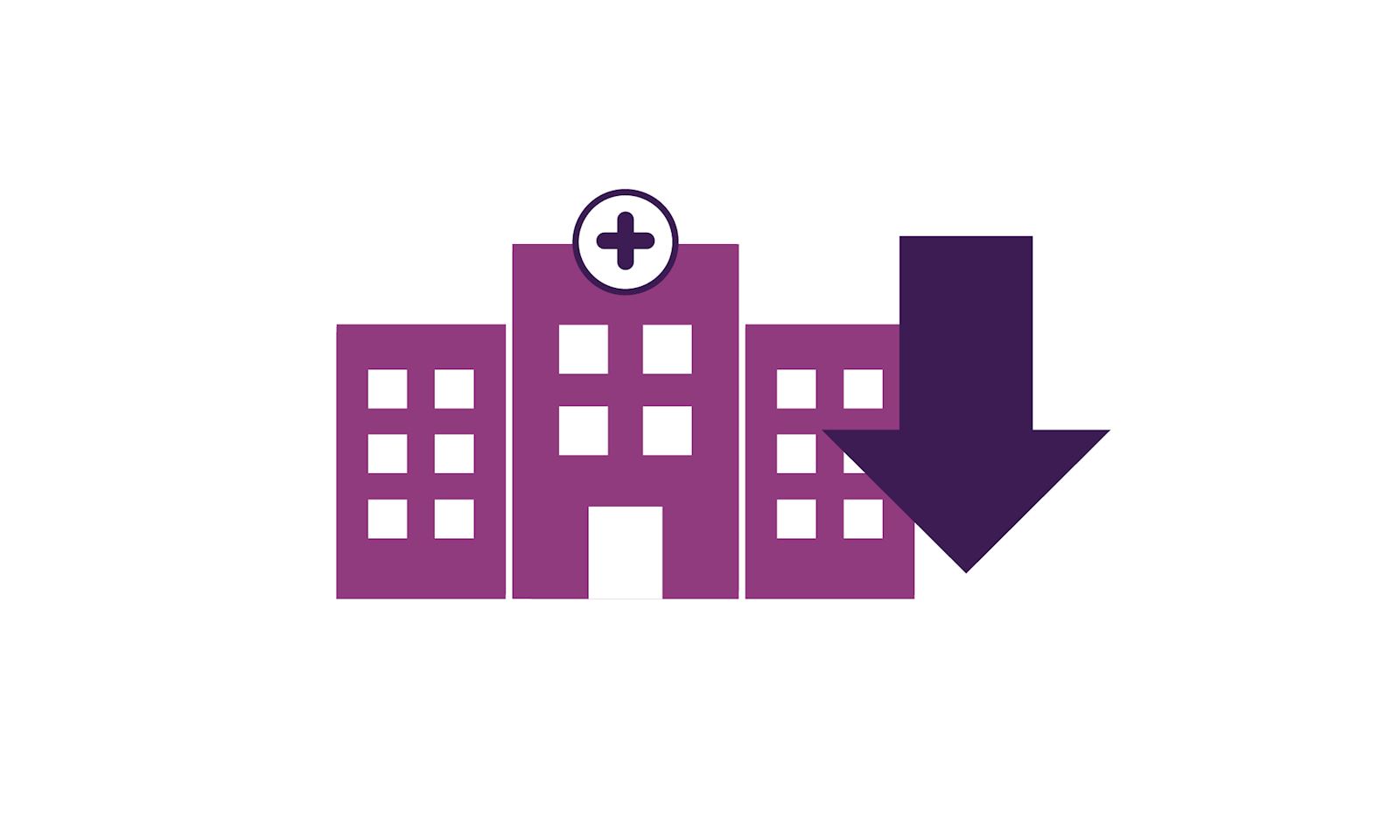
Food as medicine is emerging as a powerful strategy to reduce hospital readmissions, improve patient outcomes and lower healthcare costs. As health plans and healthcare organizations seek solutions to support patients after discharge, nutrition-based interventions are gaining attention as an effective way to improve recovery and reduce avoidable hospital utilization.
The Affordable Care Act (ACA), enacted in 2010, established the Hospital Readmissions Reduction Program (HRRP). Beginning in fiscal year 2013, hospitals with higher-than-expected readmission rates for certain conditions and procedures became subject to reductions in Medicare payments capped at 3%. Failing to lower patient readmission rates not only leads to strong financial penalties, but also to fewer or potentially lost referrals and higher costs to deliver care.
One approach many organizations are using to reduce hospital readmissions is nutrition. It’s part of the wider food as medicine movement that recognizes that diet has the potential to cause disease, as well as the potential to prevent, reduce and even reverse some conditions. Food as medicine programs can be designed to align closely with value-based care goals by helping healthcare organizations improve quality measures, reduce avoidable utilization and support whole-person care.
That’s why prevention and post-discharge nutrition-based resources, programs and incentives are becoming an important part of many health plans. They’re needed more than ever as chronic diseases and healthcare costs are on the rise in America:
- 90% of adults ages 65 and older have at least one chronic condition.
- Chronic diseases are the leading cause of illness, disability and death.
- 90% of the nation's $5.3 trillion in annual healthcare costs are for individuals with chronic and mental health conditions
How does nutrition connect with hospital readmissions?
Research continues to show that malnutrition is associated with higher healthcare utilization, increased length of stay and greater risk of hospital readmissions. Identifying and addressing nutritional needs before and after discharge can play an important role in supporting recovery, maintaining independence and reducing hospital readmissions and avoidable healthcare costs.
- Up to 50% of patients admitted to the hospital are at risk for malnutrition or are malnourished, particularly older adults.
- A study published by Avalere Health in partnership with the Academy of Nutrition and Dietetics and other stakeholders, showed that malnourished adult inpatients have a 54% higher likelihood of 30-day hospital readmissions than patients who are well-nourished.
- The average cost per readmission were 26-34% higher for patients with malnutrition compared to those without malnutrition.
Medically tailored, home-delivered meals as a post-discharge solution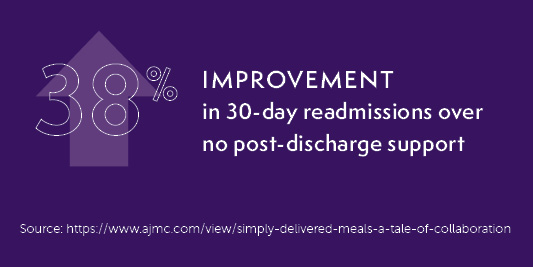
Post-discharge meals have proven to be a big deterrent to hospital readmissions, since post-discharge meals help ensure patients continue to receive proper nutrition once they leave the hospital.
This is especially key for patients suffering from a chronic condition, which puts them at risk for malnutrition. Patients with chronic conditions like diabetes or heart disease may require a diet low in sugar, fat, sodium or cholesterol. Post-discharge meals are equally important to individuals who simply cannot prepare meals for themselves or whose caretakers don’t know how to fulfill their nutritional needs, as well as those who are food and nutrition insecure.
Food as medicine post-discharge programs at work
Kaiser Permanente Southern California (KPSC) and Mom's Meals®
A 2023 study reported in JAMA Health Forum reinforces the importance of convenient access to good nutrition as one of the most important factors in successful post-discharge healing.
For the research, KPSC offered four weeks of Mom’s Meals home-delivered meals to an ethnically diverse cohort of almost 12,000 Medicare Advantage patients who were recently discharged from 15 Kaiser Permanente hospitals. Study participants had been admitted to the hospital for heart failure or other acute medical conditions.
Results from the study group, or “meals benefit” group, were compared with two control groups, one from a 2019 historical study and another concurrent cohort that did not receive a meals benefit. The KPSC study showed patients who received the Mom’s Meals home-delivered meals benefit had lower odds of 30-day rehospitalization and death, and providing convenient access to quality nutrition through home-delivered meals may improve outcomes for older adults.

Washington, D.C. Medicaid Plan and Mom’s Meals
A 2022 program supported members discharging from an inpatient stay with home-delivered medically tailored meals from Mom’s Meals to prevent readmissions and address upstream drivers of health, including food instability, non-emergent emergency department utilization, emergency medical services (EMS) utilization and potentially preventable admissions.
Members discharged from a hospital or skilled nursing facility received two medically tailored meals a day for 2-4 weeks. In addition to meals, members received case management or care coordination support.

Mom's Meals
As healthcare organizations continue to seek strategies that improve outcomes while reducing total cost of care, food as medicine programs are emerging as a valuable solution. By addressing nutrition during care transitions, organizations can support recovery, reduce hospital readmissions and improve the overall patient experience.
Mom’s Meals offers post-discharge care programs that provides expedited nutritional support to patients at the start of their recovery from a hospital or skilled nursing facility stay. We work with health insurers, health systems, hospitals and other healthcare organizations to create post-discharge meal delivery programs that work for their members and patients.
Resource for you
Food as Medicine at Scale: 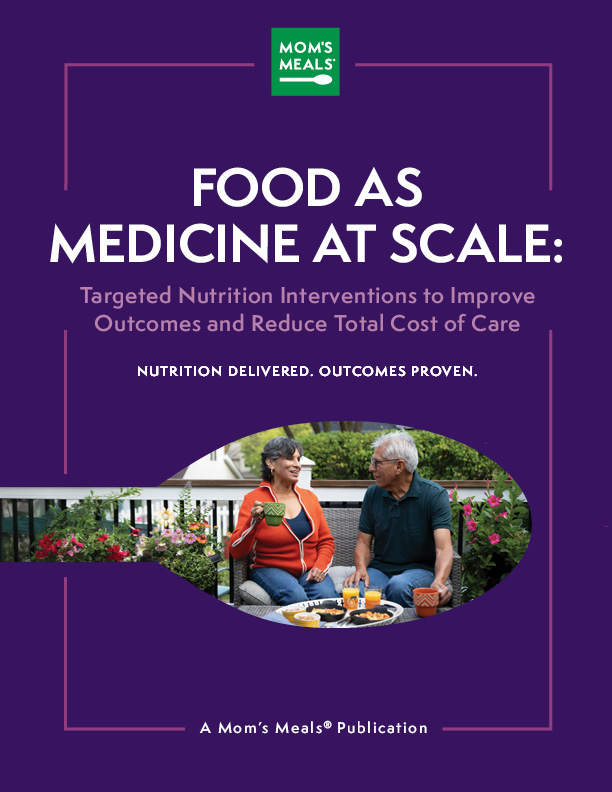
Targeted Nutrition Interventions to Improve Outcomes and Reduce Total Cost of Care
Mom's Meals® white paper provides new evidence and practical insights for healthcare leaders with an in-depth exploration of:
- Where food as medicine has the greatest impact
- Program models that support long-term success
- Strategies to improve outcomes and reduce total cost of care